Recovery duty
State typical casualty vehicles, operating terrain, approach constraints, loading method, maximum intended lift or tow task, duty cycle, climate, and roadside visibility needs.
PROCUREMENT NOTE / FIRST ORDER
Compare quotes from up to 3 factories
FREE basic specification and sourcing-requirements review
Eligible first orders may receive up to 3%
Eligibility applies to qualified business buyers and is confirmed after we review your product, quantity, destination, and sourcing requirements. Final savings depend on supplier confirmation, product type and order value.
Independent sourcing partner for business buyers
RecoveryRig Source is an independent sourcing partner that helps US business buyers turn recovery duty, carrier geometry, chassis ratings, quantity, destination, and document needs into one controlled request for candidate original manufacturers. We are not a manufacturer, dealer, importer of record, or approval body.
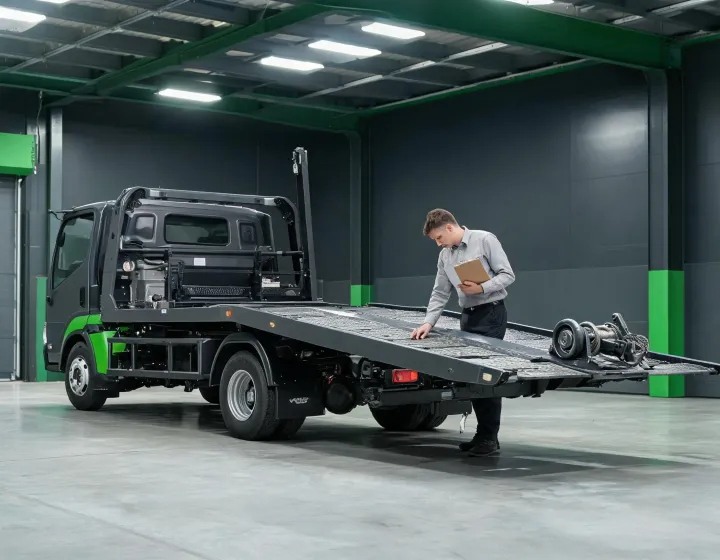
Requirement lock
State typical casualty vehicles, operating terrain, approach constraints, loading method, maximum intended lift or tow task, duty cycle, climate, and roadside visibility needs.
Define cab and drive layout, wheelbase, carrier length and width, deck angle, winch rating basis, wheel-lift arrangement, hydraulics, controls, lighting, tires, brakes, and tool storage.
List total units, configuration splits, acceptable alternatives, inspection lot, spare-parts expectations, target budget with currency, and whether the budget is per unit or total order.
Name the US state or port, requested delivery window, Incoterm, packing or transport method, exact-model documents, inspection needs, and the party responsible for destination review.
System compatibility
Record engine or motor, transmission, drivetrain, wheelbase, suspension, axle ratings, brake configuration, PTO or hydraulic-power provision, emissions configuration, and model year. A bare-chassis maximum does not establish the completed truck rating.
Request the carrier material and dimensions, deck angle, winch line and rating basis, wheel-lift geometry, underlift limits, hydraulic layout, control positions, tie-down points, lighting, and stated load-distribution assumptions.
Compare fuel or charging needs, manuals, diagnostic access, spare parts, warranty exclusions, inspection access, inland transport, ocean freight, and destination handoff. Support claims require location-specific confirmation.
Evidence questions
Reference pages help define fields, but only configuration-specific supplier evidence can support a quotation.
Ask for GVWR, front and rear GAWR, completed-unit curb or tare basis, carrier and accessory mass, payload calculation, wheel-lift and towing assumptions, and axle loads for the quoted chassis and body.
Request carrier drawings, deck dimensions, winch and wheel-lift specifications, hydraulic component schedule, controls, safety interlocks, inspection points, manuals, and any proposed substitutions.
Request evidence by exact manufacturer, model, configuration, powertrain, and model year. FMVSS, EPA, import, state registration, and operating acceptance remain separate destination-specific decisions.
Controlled RFQ
We use the same brief for candidate factory outreach so substitutions, exclusions, inspection needs, documents, and total procurement cost lines remain visible.